In modern intralogistics, adopting heavy-duty AGV transporters is no longer a straightforward equipment decision. It is a systems engineering initiative that impacts facility layout, production planning, IT integration, operator workflows, and long-term automation strategy.
For this reason, technology selection cannot be limited to the vehicle itself. The hardware platform—mechanics, traction systems, sensors, and onboard controls—represents only one component of the overall solution. Equally critical is ensuring that the entire system architecture, from fleet management to integration with enterprise platforms, delivers precision, reliability, and long-term scalability.
This is precisely where the integration of AGV technology with OMNI multidirectional mobility creates a distinct technical advantage for industrial environments with demanding internal transport requirements. While OMNI is already a highly advanced and feature-rich platform, the addition of the AGV layer elevates it into a fully automated, high-performance system. Together, they provide a comprehensive solution to complex material handling challenges.
AGV technology: a systems-level transformation
The implementation of a heavy-duty AGV transporter is not merely the installation of a machine; it is a comprehensive engineering integration project. Overall system performance depends on how effectively the AGV is embedded within the plant’s physical infrastructure, digital architecture, and operational workflows.
Key engineering considerations
Layout and route engineering
AGV routes must be carefully mapped, validated, and optimized according to:
- aisle widths
- turning radii
- dynamic traffic conditions
- interactions with forklifts and pedestrian flows
- docking accuracy and positioning tolerances
Even the most advanced transporter can underperform if the surrounding system is not properly engineered. A poorly designed route, for example, can significantly constrain performance regardless of the vehicle’s technical capabilities.
Software integration (ERP, MES, WMS)
AGV transporters require seamless and reliable communication with production and logistics management systems. Engineering design must clearly define:
- call logic (automatic or event-driven)
- priority management rules
- mission allocation criteria
- component traceability requirements
- communication protocols (API, OPC-UA, etc.)
Safety zoning and functional risk assessment
The deployment of AGV transporters requires a comprehensive safety analysis aligned with operational needs and applicable regulatory standards. This includes:
- speed profiles
- definition of restricted or controlled-access zones
- shared-traffic management rules
- emergency-stop logic and safety redundancies
- compliance with ISO 3691-4
Energy and charging strategy
To guarantee operational continuity and fleet efficiency, the energy strategy must be engineered with precision, including:
- fast charging or opportunity charging solutions
- optimized placement of charging stations based on layout, traffic density, and mission profiles
- fleet-level energy management rules
Change management and operator interaction
Even fully automated systems involve structured points of human interaction. Proper system design must therefore define:
- human-machine interfaces
- manual operating modes and structured override procedures
- preventive and corrective maintenance routines
- clear operational boundaries
In summary, an AGV is not a standalone vehicle but a fully integrated system. Its success depends on the overall quality of the engineering framework that supports it. OMNI delivers its full value when the entire solution—from facility layout to control logic and operational integration—is designed as a coherent, optimized, and future-ready system.
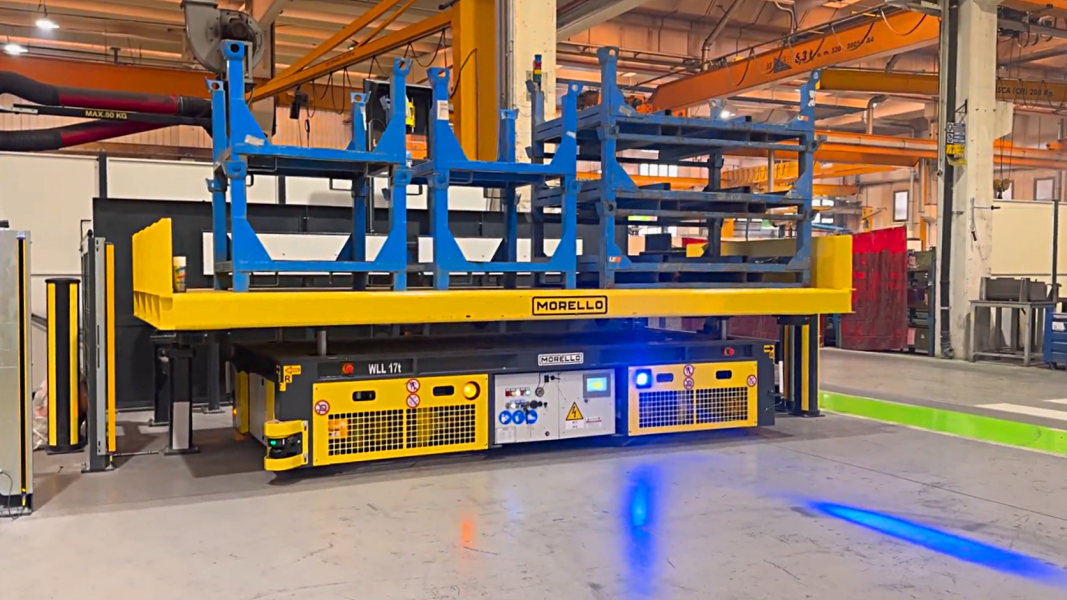
The OMNI platform: engineering mobility beyond conventional limits
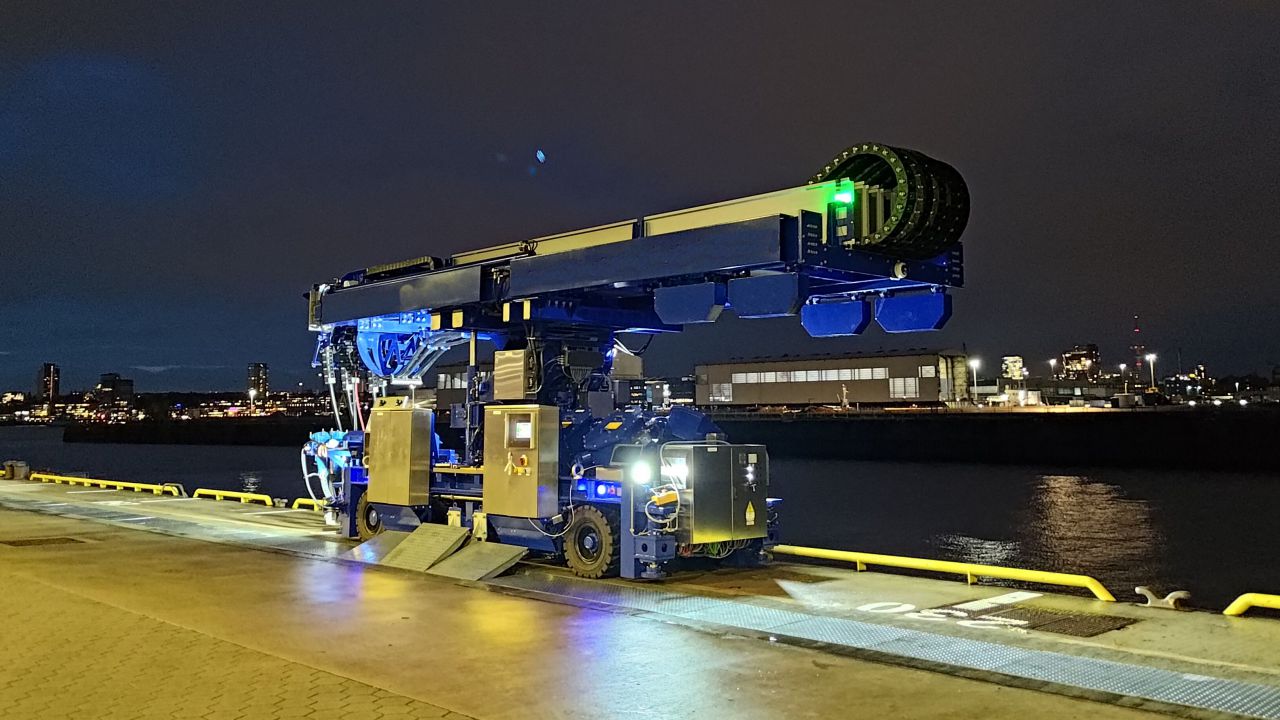
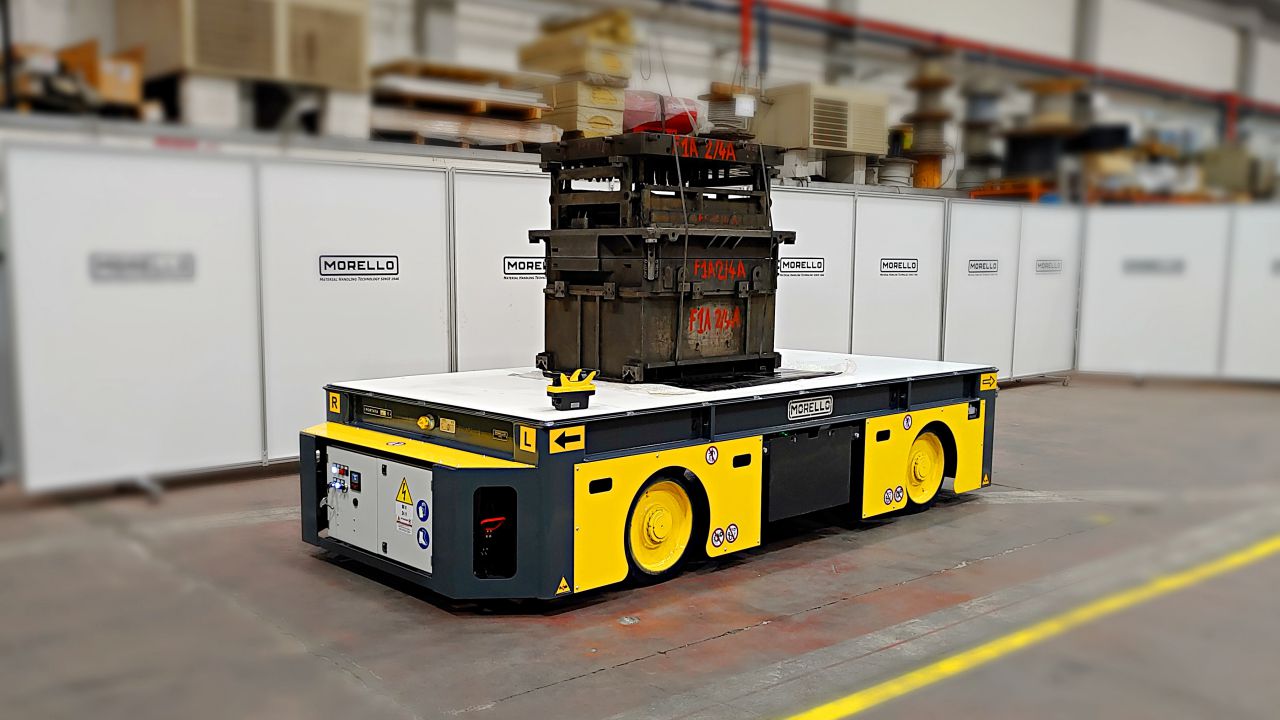
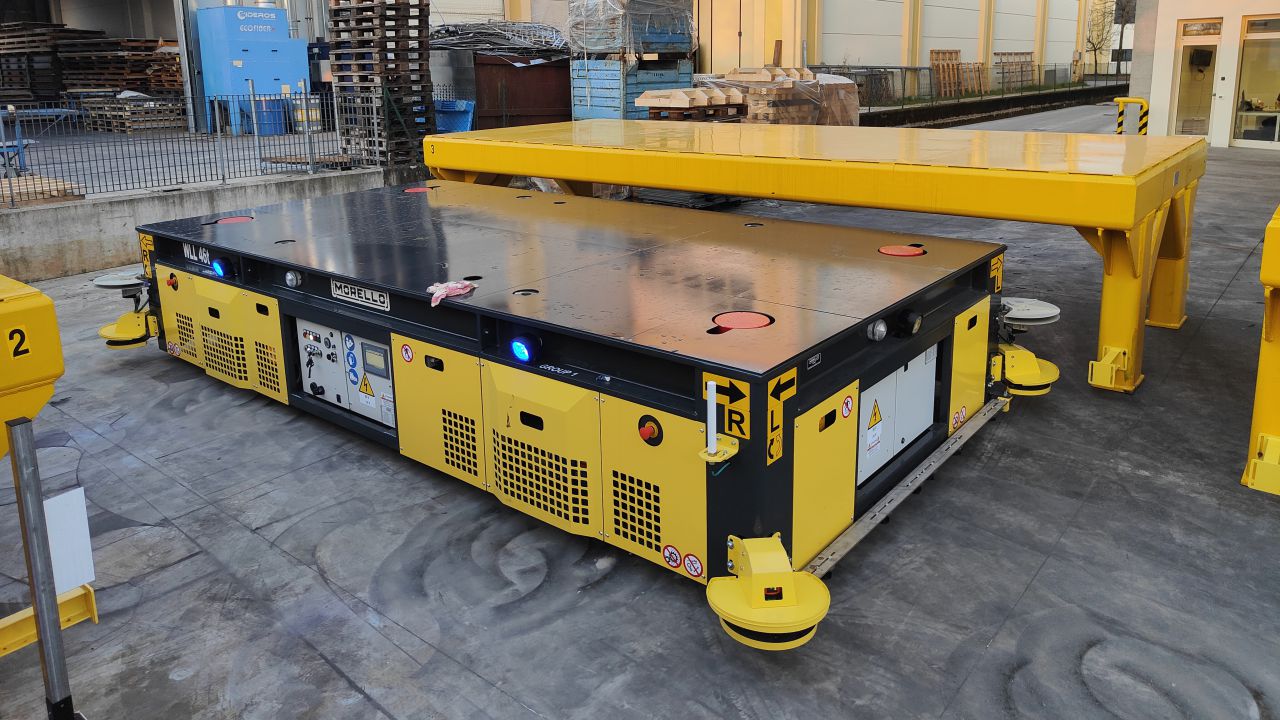
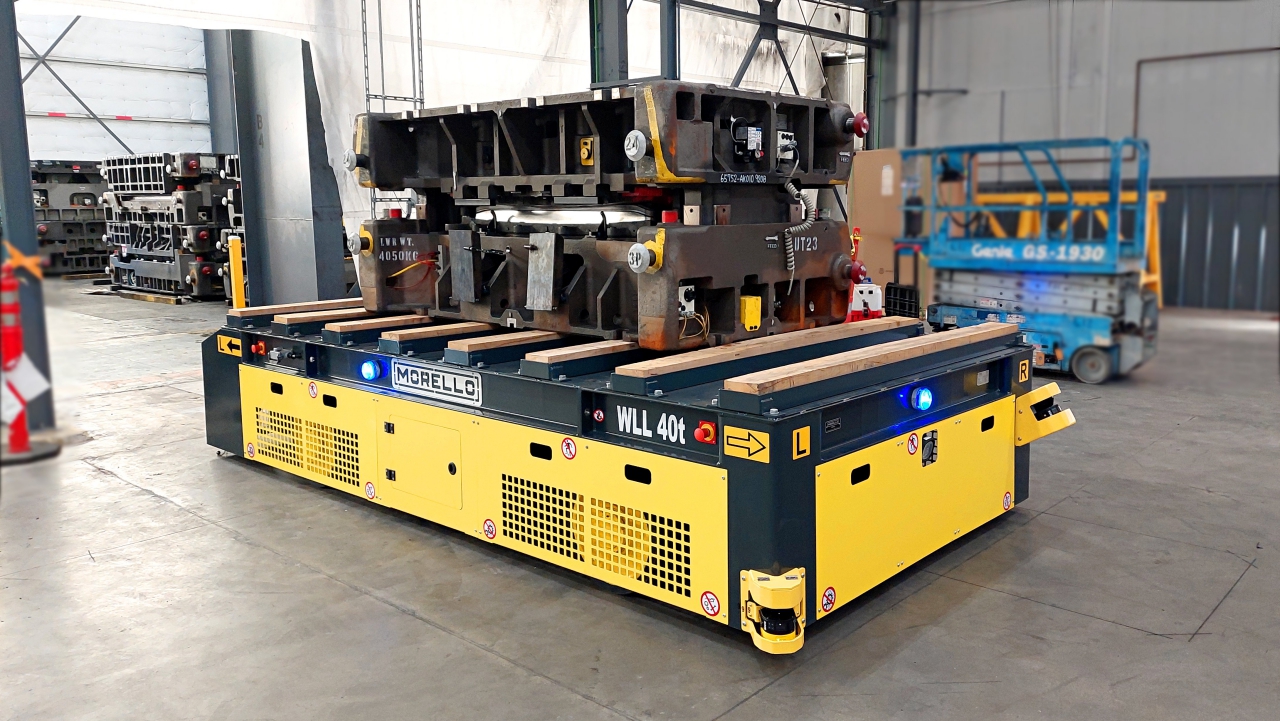
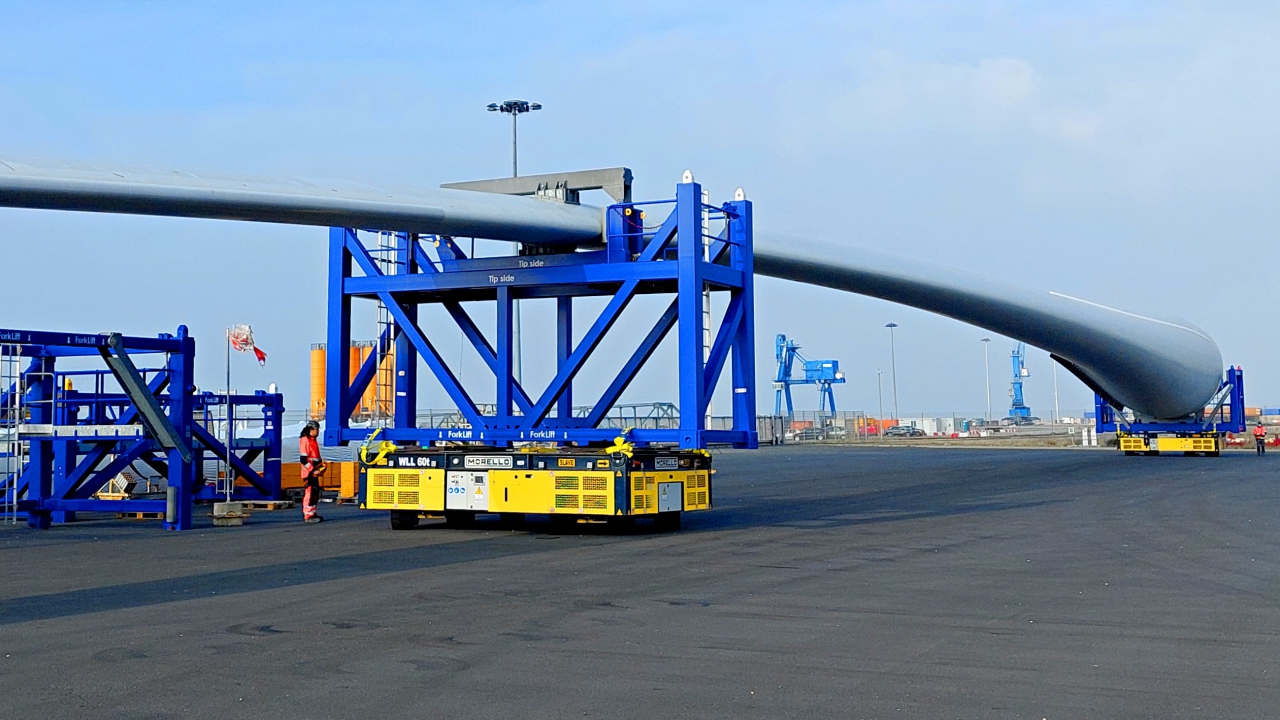
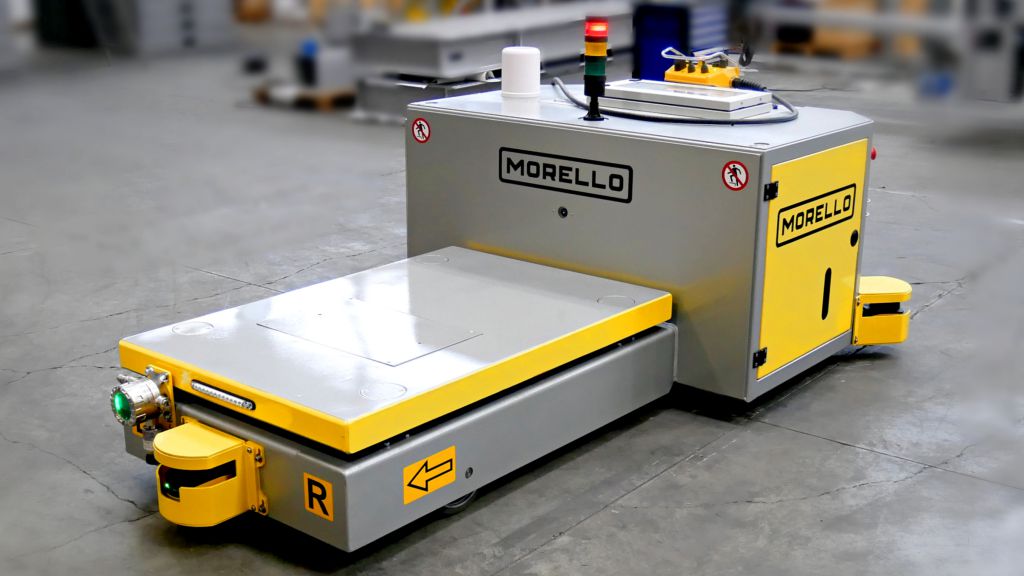
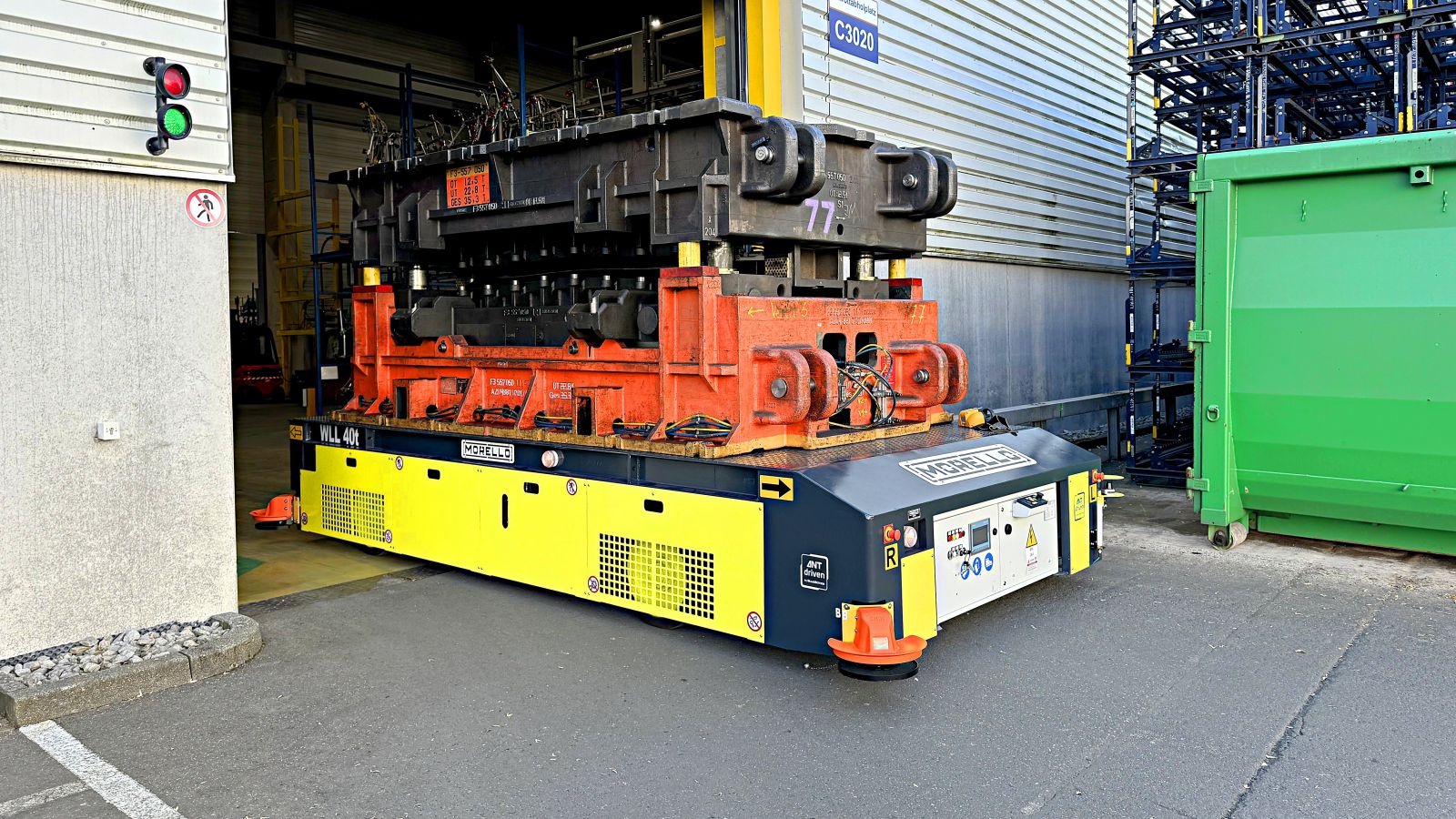
While the AGV layer governs system integration and automation logic, the OMNI heavy-duty transporter provides the mechanical foundation that enables superior maneuverability and load-handling performance in the most demanding industrial environments.
OMNI’s engineering advantages
Multidirectional wheel technology
OMNI is designed for true omnidirectional movement. It can operate:
- laterally
- diagonally
- rotationally on its own axis
- within ultra-tight operating spaces
This capability significantly reduces the need for facility layout modifications and allows AGVs to function efficiently in high-density storage areas and complex production environments.
Precision positioning and load stability
For highly critical loads, OMNI ensures:
- smooth and controlled acceleration profiles
- minimal structural oscillation
- high positional accuracy at docking points
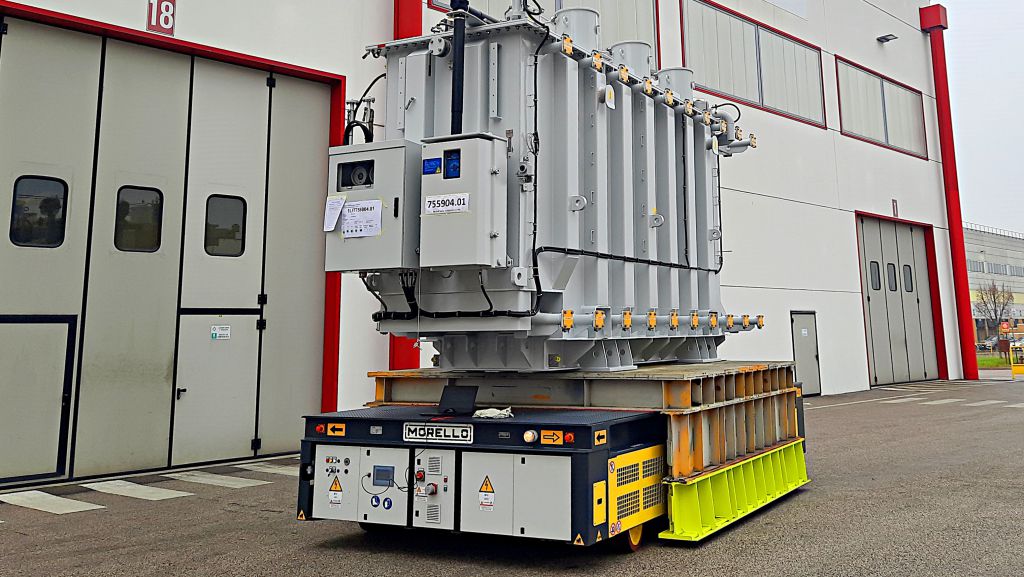
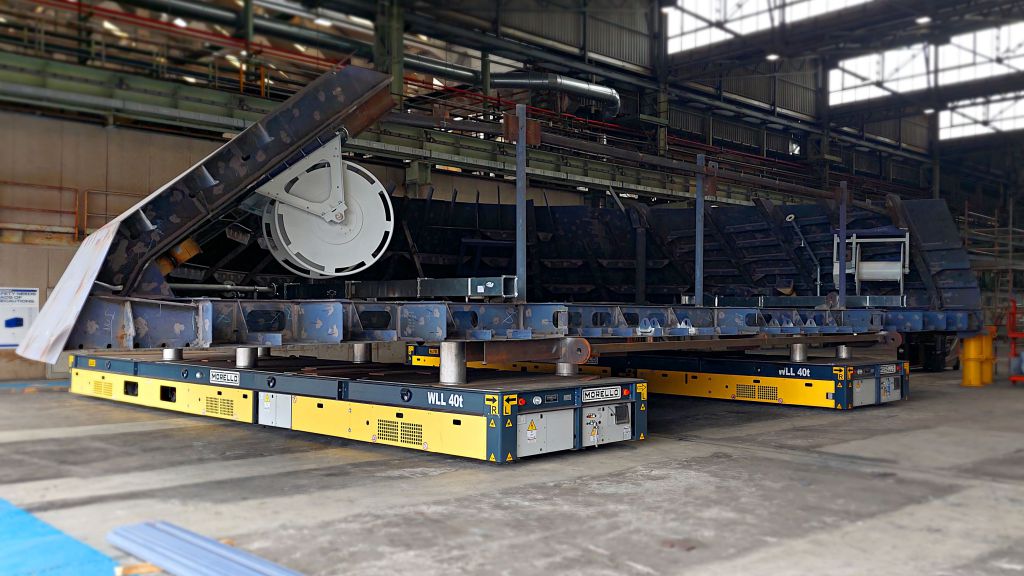
- consistent repeatability, even when handling heavy or oversized loads
Scalable mechanical architecture
OMNI’s platform is engineered with modular flexibility. Engineers can configure:
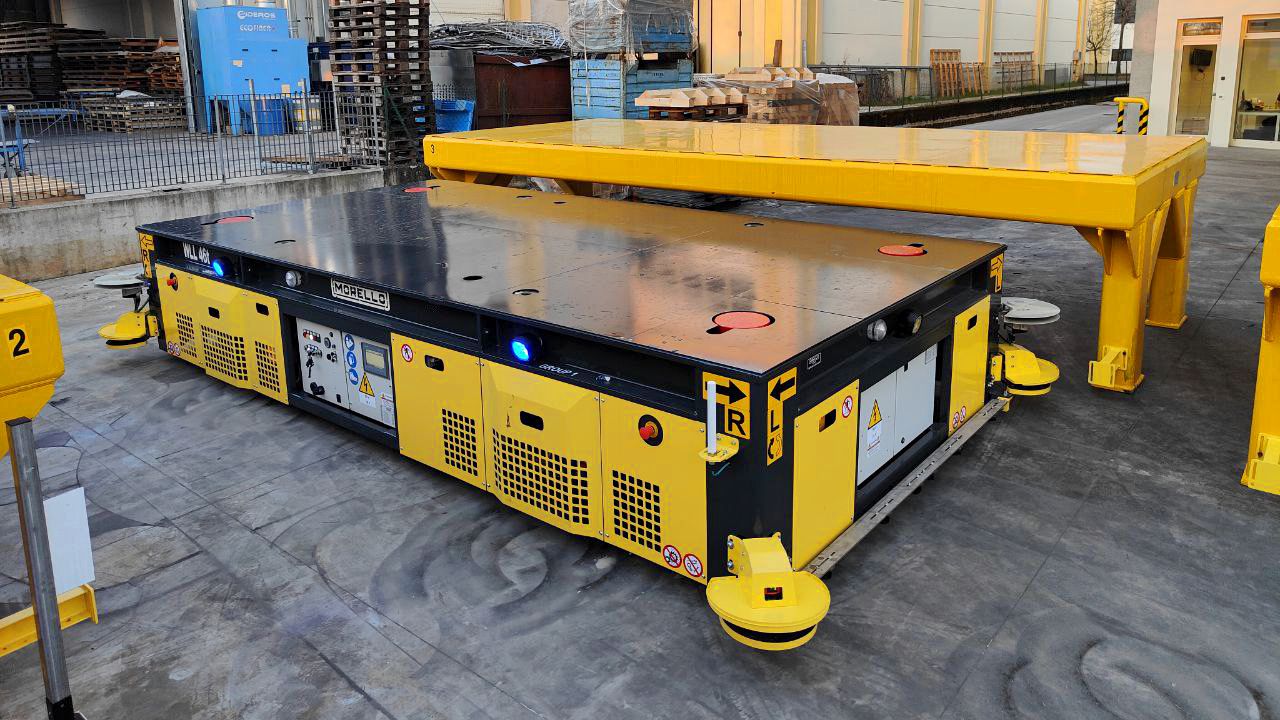
- custom platform dimensions
- variable load capacities
- integrated lifting modules
- specialized top modules tailored to specific load types
This mechanical adaptability is particularly valuable when managing complex industrial components or non-standard loads.
Industrial-grade electric drive system designed for heavy-duty applications
OMNI is purpose-built for demanding industrial applications and features:
- industrial-grade electric motors
- high-torque drive control systems
- reinforced frames and heavy-duty weld structures
- long-life battery systems
- a maintenance-oriented design that simplifies servicing and minimizes downtime
Together, these features ensure long-term reliability and consistent operational performance, even in intensive, multi-shift production environments.
AGV + OMNI: a combined engineering advantage
Engineering value is fully realized when OMNI mobility and AGV control operate as an integrated system, where maneuverability, precision, and operational logic reinforce each other.
Reduced need for infrastructure modifications
Thanks to true multidirectional movement, AGV routes can be optimized without widening aisles or restructuring existing layouts.
Increased throughput
OMNI’s manoeuvrability reduces:
- turning cycles
- waiting times
- congestion at intersections
- bottlenecks in high-traffic zones
The result is a measurable increase in logistical efficiency and smoother material flow.
Higher precision in automated processes
In assembly, machining, and production lines, OMNI’s high positional accuracy enables seamless integration with automated docking stations and robotic cells. This improves alignment, reduces scrap rates, and stabilizes cycle times.
Improved system-level safety
Multidirectional mobility, combined with AGV sensor fusion and advanced fleet-management logic, ensures predictable and stable motion paths — an essential requirement in shared human-robot environments.
ROI from an engineering perspective
For engineering managers and project leaders, ROI is driven by measurable performance indicators:
- Cycle-time reduction: Reduced maneuvering time translates directly into increased material flow and productivity.
- Enhanced layout efficiency and space utilization: Multidirectional AGVs operate effectively within limited space, delaying or eliminating the need for costly layout expansions.
- Lower maintenance and fewer failures: Industrial electric drives, controlled acceleration profiles, and modular hardware architecture reduce downtime and simplify servicing.
- Consistency across shifts: Automation eliminates human variability — critical in operations with tight production schedules and high throughput demands.
- Scalability: Once the AGV + OMNI system is deployed, expanding capacity becomes primarily a software-driven scaling process rather than a structural redesign.
In large-scale or multi-shift operations, these engineering benefits typically translate into highly attractive payback periods, depending on workflow intensity and operational complexity.
When a premium AGV system makes sense and when it doesn’t
A premium AGV system is not a matter of principle; it is a strategic decision driven by operational context and measurable return. Real value emerges when automation stabilizes material flows, reduces variability and bottlenecks, and transforms internal logistics into a controlled, scalable process.
Conversely, in environments characterized by continuous change or insufficient volumes to justify automation, more flexible or partially manual solutions may offer greater efficiency.
✅AGV + OMNI is engineered for environments where:
- internal transport is repetitive and high-volume
- precision and timing are critical
- layouts are dense or structurally complex
- automation is part of a long-term strategic roadmap
❌It is not recommended for environments with:
- low-volume or unpredictable workflows
- rapidly changing layouts without defined routes
- limited operational standardization
- occasional or non-repetitive transport requirements
In such cases, ROI may be limited. AGV technology should be applied only where the use case justifies the investment.
Heavy-duty intralogistics: when OMNI and AGV operate as one system
OMNI delivers superior mobility performance and mechanical robustness. AGV technology adds system intelligence and a structured automation architecture.
Engineered together, they form a unified, high-performance material-handling solution designed for industrial environments with strict requirements in throughput, safety, and system integration.
For engineering directors, production managers, and automation specialists, AGV + OMNI represents a pathway toward more precise, predictable, and scalable internal logistics — provided the use case is robust and integration is executed with technical rigour.
Contact us. The Morello’s team is ready to develop tailor-made handling solutions designed to meet the most complex intralogistics challenges.