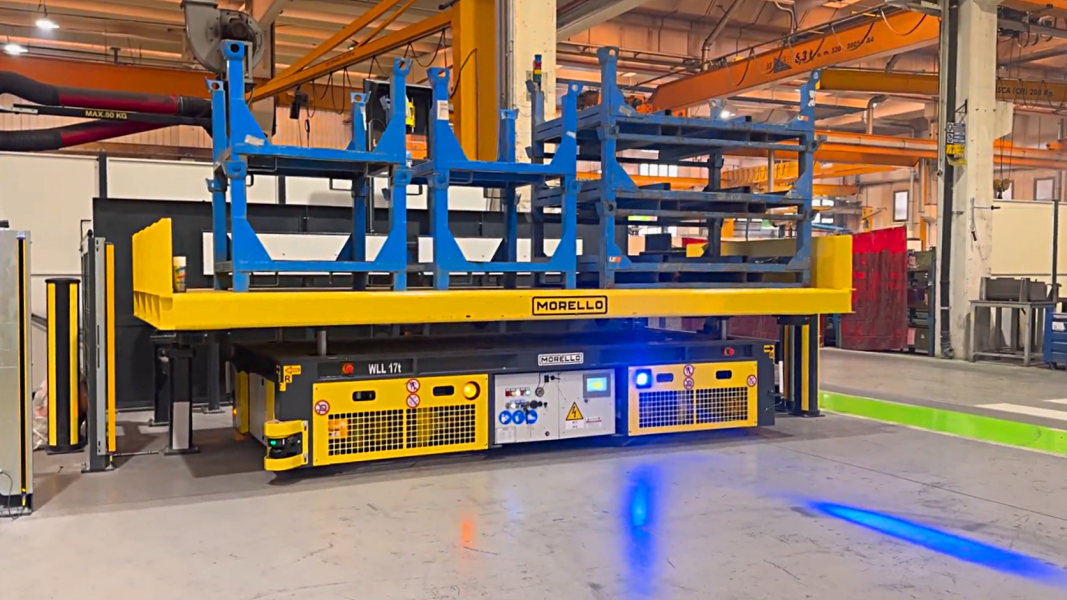
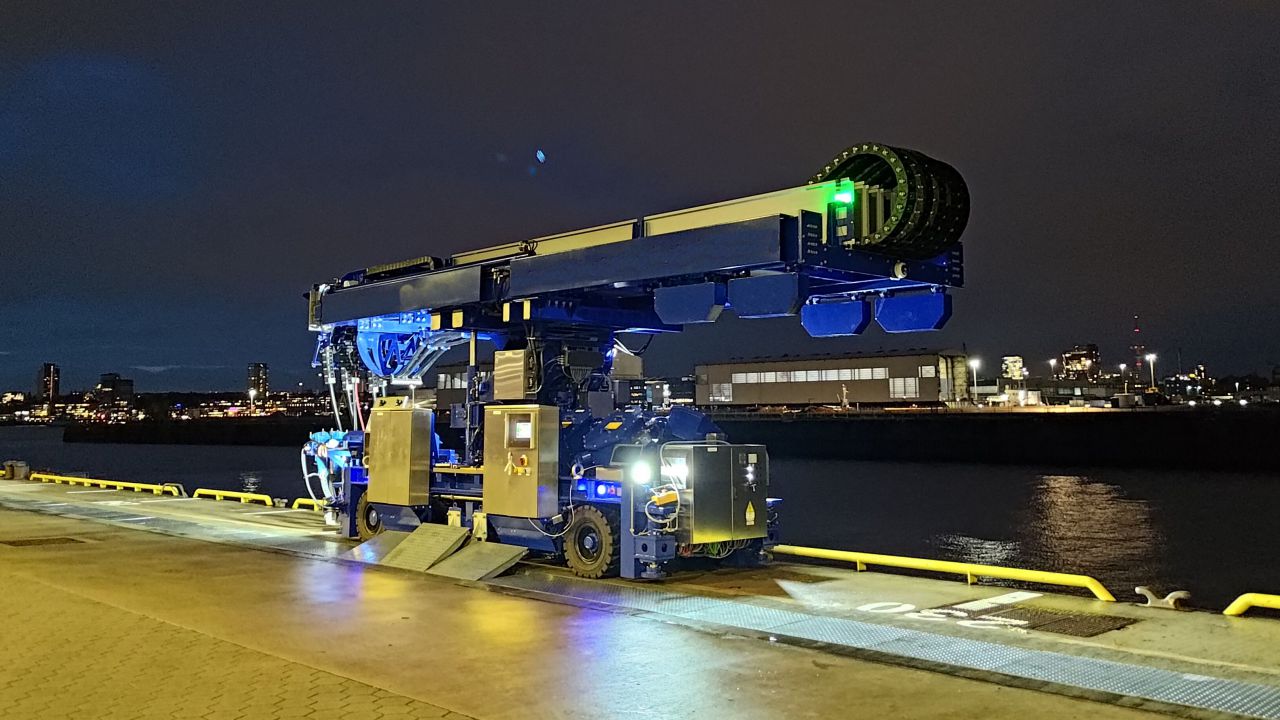
Shore power and heavy-duty handling: Morello’s contribution to the green transition of European ports

As global efforts to decarbonize maritime transport accelerate, the transformation of European ports is rapidly gaining momentum.

Within this evolving technological and regulatory landscape, Morello has positioned itself for over a decade as a trusted industrial partner in the shipbuilding and offshore sectors. The company designs and manufactures custom battery-powered electric transporters engineered to operate reliably in the most complex and demanding marine environments.

With the introduction of Shore Power requirements under new EU regulations, port authorities and energy providers are now required to deploy systems capable of connecting docked vessels to high-voltage on-shore power grids. These systems must meet rigorous standards of safety, reliably, and operational efficiency.

Morello is already delivering tangible, field-proven solutions that support the development of next-generation port infrastructures dedicated to Shore Power implementation.

Proven expertise in heavy-duty handling for the naval and offshore sectors

Morello brings extensive experience in the shipbuilding and offshore industries, having supplied heavy-duty transporters to leading international groups such as Fincantieri, Saipem, Damen, and Samsung Heavy Industries.

Within this highly specialized sector, the company has developed machines specifically engineered to:

  • Withstand extreme environmental conditions, including wind exposure, salt spray, high humidity, and prolonged UV radiation.
  • Operate reliably under heavy loads for extended periods, both indoors and on exposed quays.
  • Integrate customized chassis configurations, advanced anti-corrosion treatments, and reinforced structural components.
  • Incorporate stabilizers, ballast systems, and optimized transport geometries to ensure safety and precise control when handling long or overhanging loads.

These capabilities are critical in port operations, where equipment must deliver precision, operational continuity, and long-term reliability—even in harsh and highly demanding marine environments.
The transition to Shore Power: a new imperative for port infrastructure

In 2023, the European Union adopted a strategic regulatory framework for the decarbonization of maritime transport as part of the “Fit for 55” package. Within this framework, two key regulations are driving substantial investments across Europe, accelerating the transformation of port infrastructure and associated energy systems.

The FuelEU Maritime Regulation establishes that, starting January 1, 2030, container ships and passenger vessels with a gross tonnage of 5,000 GT or more must connect to onshore power supply systems (Shore Power) while at berth in major TEN-T ports, or alternatively adopt zero-emission solutions. The monitoring phase began in 2024, with enforcement measures and financial penalties scheduled to take effect from 2030.

The AFIR (Alternative Fuels Infrastructure Regulation), also included in the “Fit for 55” package, sets a clear infrastructure objective: by 2030, Shore Power facilities must be available to serve at least 90% of port calls by large vessels in TEN-T core and comprehensive ports.

Together, these regulations are already reshaping the European port landscape. They also reinforce Morello’s position as a strategic industrial partner in port modernization projects and regulatory compliance initiatives related to Shore Power implementation.

Morello as a technological enabler of Shore Power infrastructure

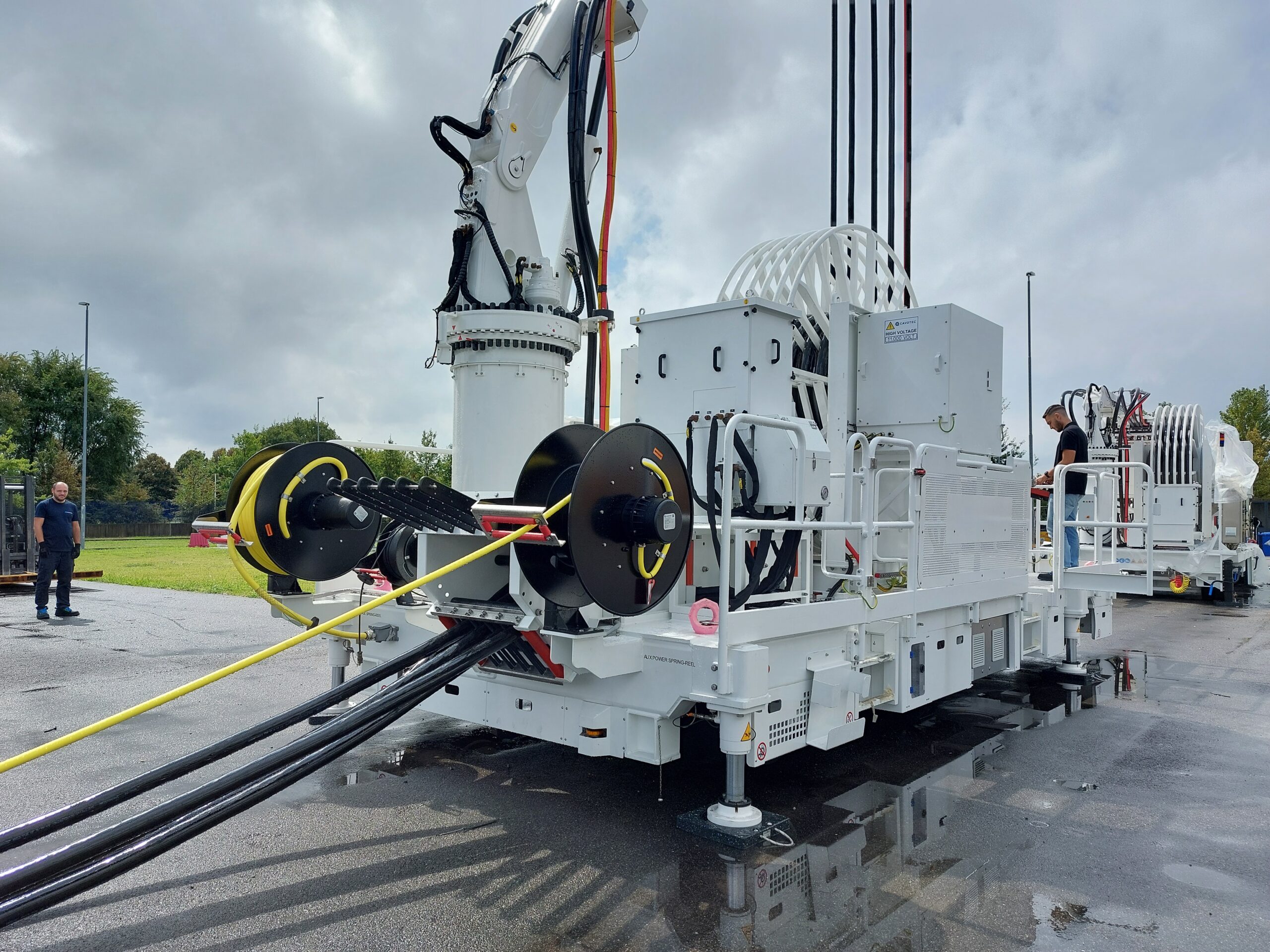
The implementation of Shore Power systems requires ports and shipyards to integrate complex cable-reel units and high-voltage transfer equipment capable of safely connecting berthed vessels to the onshore electrical grid. These systems, typically supplied by specialized energy providers, depend on advanced handling solutions to ensure the precise positioning, stabilization, and safe management of highly critical components.

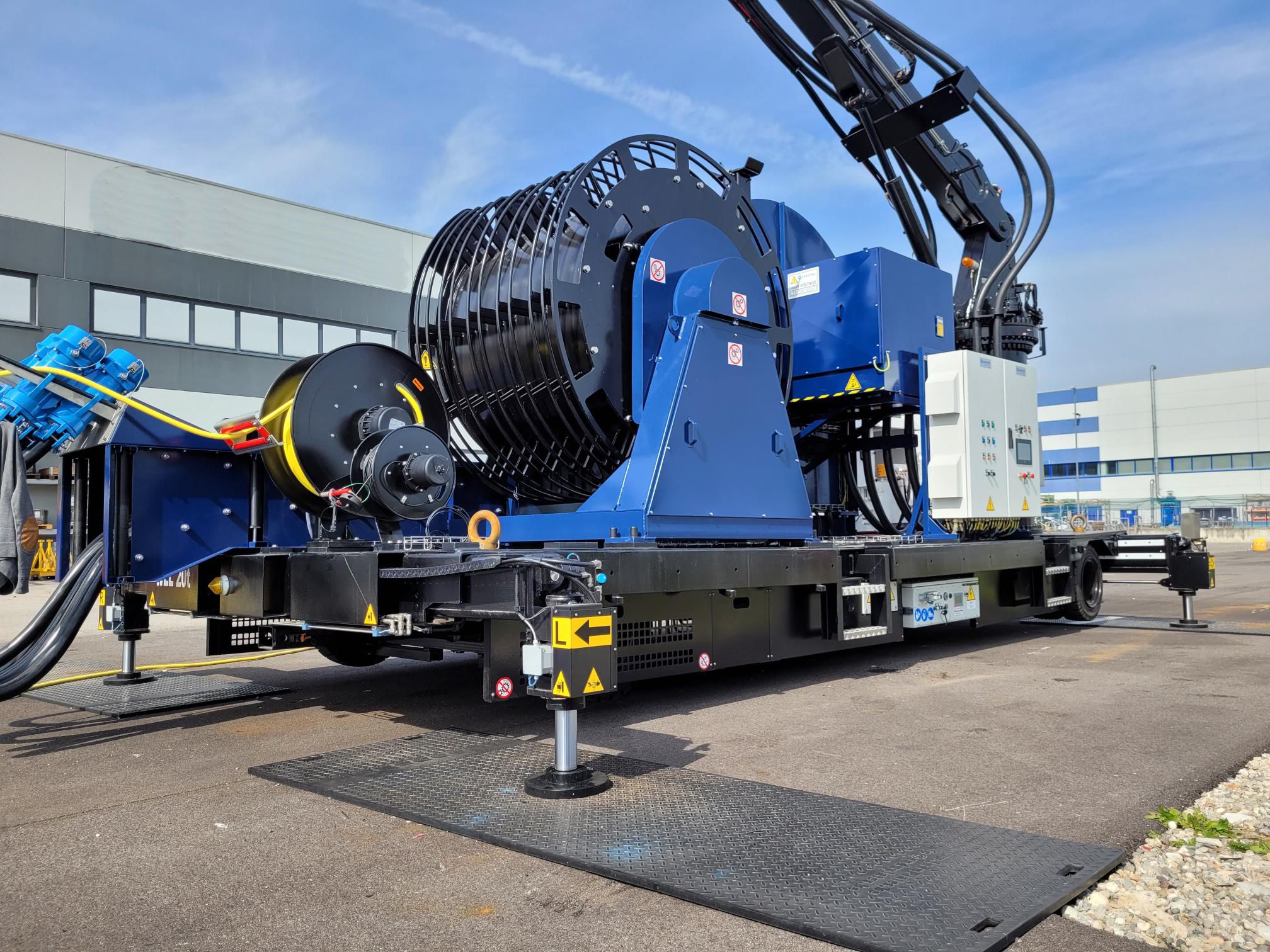
To meet these demanding requirements, Morello’s engineering team has developed dedicated configurations of the SGAI transporter, along with custom-designed trailer systems, featuring load capacities of up to 20 tons and overturning moments of up to 40 ton-meters.

These are not off-the-shelf machines, but purpose-built platforms specifically engineered for handling ultra-high-voltage cable reels, characterized by:

  • Significant overhangs and cantilever loads
  • Advanced stabilization systems designed to prevent tipping under strong crosswinds or uneven surface conditions
  • Marine-grade finishes, including specialized anti-corrosion coatings and stainless steel components
  • Dedicated ballast systems precisely sized to ensure safe operations on exposed quays
Morello: your industrial partner for Shore Power

The transition to Shore Power is giving rise to a complex ecosystem that includes electrical equipment manufacturers, energy infrastructure providers, engineering firms, and port authorities. All these stakeholders require robust and reliable logistics platforms capable of handling and positioning critical systems with maximum safety and precision.

Within this value chain, Morello is already established as a strategic industrial partner. The company brings extensive expertise in marine environments, designs and manufactures custom-engineered transporters for mission-critical projects, and has a proven track record in supporting the mobility of high-voltage infrastructure.

As Shore Power becomes a standard infrastructure requirement across European and international ports, Morello stands ready to support port operators, engineering companies, shipyards, and offshore terminals in the modernization of their logistics fleets. The company provides heavy-duty handling solutions aligned with the latest environmental regulations and operational standards.

Morello is proud to contribute to a cleaner and more sustainable maritime future, placing engineering excellence at the service of the energy transition through reliable, compliant, and fully customized solutions for critical applications.

Contact us to discover how we can support your Shore Power or offshore port logistics projects with safe, compliant, and tailored-made transport solutions.
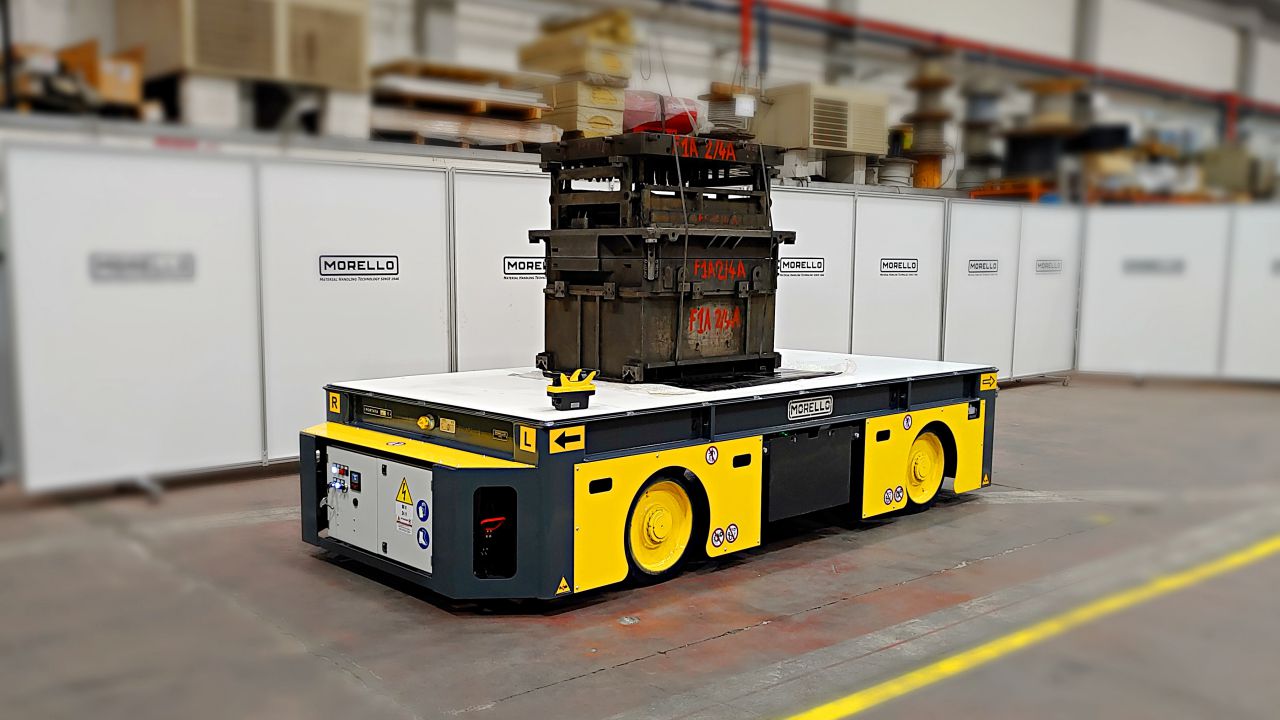
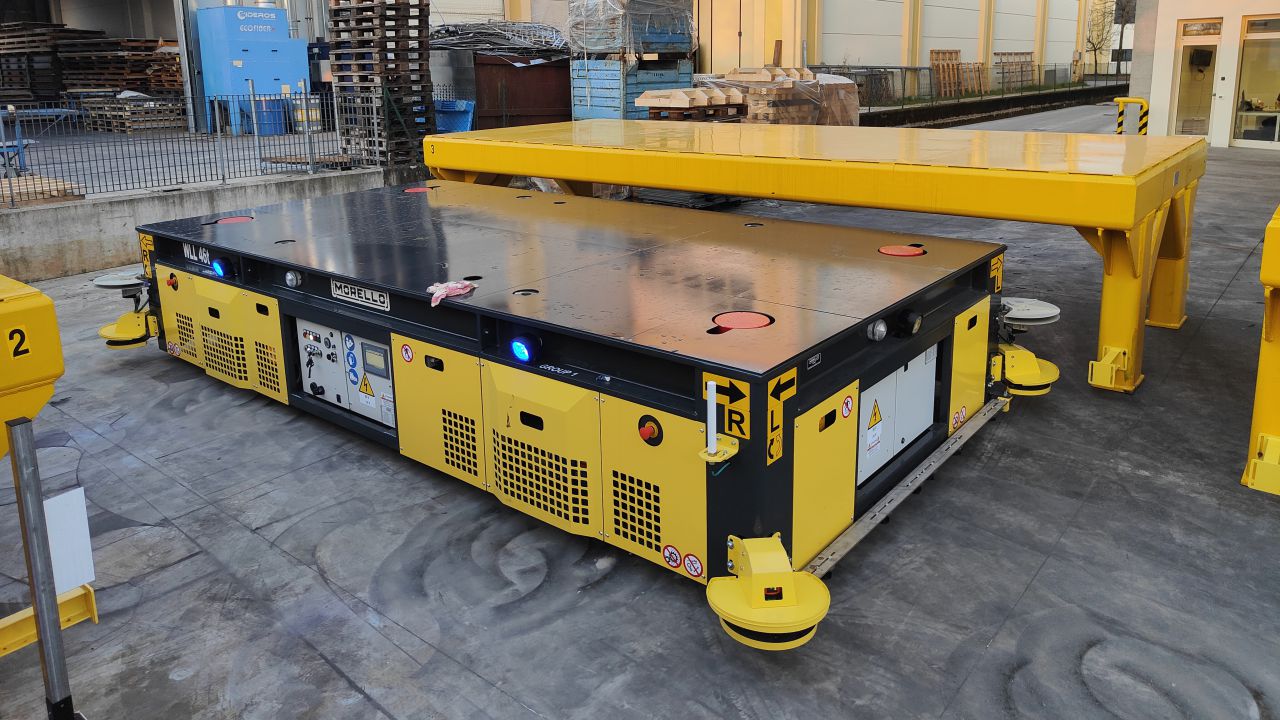
 

SGAI electric heavy-duty transporter – The most versatile workhorse for heavy-duty material handling

When companies evaluate electric solutions for heavy-duty material handling, they seek performance levels that surpass diesel or manual equipment. At the same time, they require a solution that is straightforward to implement, easy to operate, and immediately compatible with existing production processes. In this context, SGAI represents the most practical and efficient choice.

SGAI is a reliable and versatile electric transporter designed to address the majority of industrial intralogistics requirements. It combines high load capacity with operational simplicity, safety, and outstanding cost efficiency. This makes it the ideal solution for companies looking to electrify internal logistics without the structural complexity of a fully automated AGV system.

SGAI also available in AGV version

When operational demands call for higher levels of automation, SGAI can be supplied in an AGV (Automated Guided Vehicle) configuration, enabling fully automated material handling. For companies considering a transition toward automation, SGAI AGV represents a natural evolution. It retains a robust industrial platform while integrating advanced control logic designed to enhance production efficiency and process reliability. Visit the dedicated AGV section to learn more.

Designed for industrial operations

The SGAI heavy-duty transporter is engineered for industrial environments where internal material handling is a high-frequency, mission-critical process with strict requirements for operational continuity, safety, and reliability. It is the ideal solution when material flow must remain stable, predictable, and perfectly aligned with production cycles.

Over the years, SGAI has established itself as a benchmark solution across a wide range of industries, including manufacturing plants, steel mills, aerospace workshops, automotive facilities, mold manufacturers, and construction material suppliers. It is specifically designed to handle heavy loads under demanding operating conditions.

Key design principles:

  • High load capacities, typically ranging from 10 to over 200 tons
  • Reinforced welded steel chassis engineered for continuous-duty cycles
  • Electric drive and steering systems for smooth, precise manoeuvring
  • Intuitive control interfaces suitable for operators of varying experience levels
  • Customizable deck configurations, including rails, V-blocks, tilting beds, hydraulic supports, coil saddles, and integrated roller systems

SGAI is not a general-purpose vehicle. It is purpose-built for heavy-duty transfers that require precise control, enhanced safety, and consistent performance, even in harsh industrial environments.

Electric handling without the complexity

At the same time, SGAI represents the most straightforward path toward electrifying internal logistics. It delivers the core advantages of electric material handling in a ready-to-deploy solution, without requiring investments in AGV infrastructure, fleet management systems, or complex integration projects.

1. Zero emissions – Indoor safety and regulatory compliance

No exhaust fumes, no ventilation requirements, and no operator exposure to diesel particulates.
Electric handling directly supports decarbonization initiatives and workplace health strategies, making it ideal for indoor industrial environments with strict compliance standards.

2. Lower operating costs

Electric energy is significantly more cost-effective than fossil fuels.
Maintenance requirements are also reduced: fewer moving components, no hydraulic transmissions, and no internal combustion engines.

Depending on the previous handling method, companies typically achieve operational cost savings ranging from 30% to 60%.

3. High manoeuvrability in confined spaces

Electric steering systems enable tight turning radii, smooth directional transitions, and safe handling in congested areas. This makes SGAI particularly well-suited for legacy facilities or plants where space constraints limit conventional maneuvering.

4. Operator comfort and safety

SGAI integrates advanced safety and ergonomic features, including:

  • Anti-collision sensor systems
  • Deadman controls and safety PLC integration
  • Smooth acceleration and deceleration profiles
  • Ergonomic drive stations or wireless remote-control options

Companies that transition to electric handling frequently report fewer near-miss incidents and reduced operator fatigue, contributing to safer and more productive working environments.

The right handling solution for most applications

While the OMNI / AGV platform represents the highest level of manoeuvrability and full automation — ideal for complex layouts and ultra-high-value processes — many companies simply require a robust and efficient solution for core material-handling needs. In most industrial environments, the requirement is straightforward:

  • Point-to-point transport of heavy loads
  • Repetitive and predictable routes
  • Reliable, consistent performance
  • A lower initial investment
  • Rapid ROI (return on investment)
  • Minimal system integration

This is where SGAI delivers its maximum value.

Typical application areas

Steel and metallurgy: transport of coils, plates, billets, moulds, and forgings.

Aerospace: movement of fuselage sections, wings, jigs, and specialized assembly tooling.

Automotive: transfer of dies and moulds, engine blocks, and production equipment.

Construction materials: handling of stone slabs, precast concrete elements, glass panels, and structural beams.

General manufacturing: machinery relocation, in-house logistics, welding frames, and assembly structures.

When frequent handling of heavy and bulky materials is required, SGAI provides measurable advantages in terms of operational continuity, safety, and process control. It reduces time losses and variability in internal movements, limits reliance on polluting diesel vehicles, and ensures stable, repeatable transfers—even in multi-shift operations—while maintaining proportional investment levels and simplified production management.

Simplified integration, rapid deployment

One of SGAI’s key advantages is its fast and straightforward commissioning process.
Unlike AGV systems, which typically require:

  • Detailed infrastructure mapping
  • Fleet management software
  • Digital twin modelling
  • Defined safety zoning
  • Integration with production and IT systems

SGAI is delivered pre-configured, supported by essential operator training, and commissioned for immediate operation.

Most customers achieve payback within 12 to 24 months, particularly when SGAI replaces diesel forklifts, overhead cranes, or multiple small vehicles with a single electric platform. In these scenarios, economic return is driven by lower operating and maintenance costs, reduced handling and waiting times, and improved continuity of internal material flows.

Customisable to your factory — not the other way around

Each SGAI platform is custom-engineered based on the load characteristics, floor conditions, and operational workflow of the plant.

Typical customisation options include:

  • Dedicated deck configurations
  • Specific load-support systems
  • Hydraulic or mechanical lifting systems
  • Automatic loading/unloading interfaces
  • On-board weighing systems
  • Wired or wireless remote-control solutions
  • ATEX-certified versions for potentially explosive environments
  • Specialized wheels for resin floors, outdoor applications, or rail-guided paths

When to choose SGAI

SGAI is the ideal solution when the objective is to improve the efficiency and safety of heavy-duty handling by transitioning to electric power with a robust, easy-to-implement platform.

Choose SGAI when:

  • Manual or semi-manual heavy-load transport is required
  • Routes are simple, fixed, or semi-fixed
  • Rapid and cost-effective electrification is a priority
  • Low-maintenance equipment is essential
  • Mechanical robustness and simplicity are preferred over system complexity
  • Full AGV automation is not required or not yet part of the strategy
  • A scalable platform is desired, with the option for future upgrades

SGAI: the heavy-duty workhorse that delivers real results

SGAI ELECTRIC is the transporter designed to cover the majority of internal handling requirements through a practical, industrial approach. It combines high load capacity, operational reliability, and ease of management while maintaining an excellent cost-benefit ratio.

For companies aiming to electrify and modernize internal logistics with a robust, ready-to-use solution—without immediately committing to a full end-to-end automation project—SGAI represents a high-value choice: concrete performance, minimal integration complexity, and rapid ROI.

Contact us to discover how Morello’s solutions can support and optimize your logistics operations. Our technical team is available for a dedicated consultation.

The flagship model: OMNI – AGV Transporter Where advanced mobility meets intelligent automation

In modern intralogistics, adopting heavy-duty AGV transporters is no longer a straightforward equipment decision. It is a systems engineering initiative that impacts facility layout, production planning, IT integration, operator workflows, and long-term automation strategy.

For this reason, technology selection cannot be limited to the vehicle itself. The hardware platform—mechanics, traction systems, sensors, and onboard controls—represents only one component of the overall solution. Equally critical is ensuring that the entire system architecture, from fleet management to integration with enterprise platforms, delivers precision, reliability, and long-term scalability.

This is precisely where the integration of AGV technology with OMNI multidirectional mobility creates a distinct technical advantage for industrial environments with demanding internal transport requirements. While OMNI is already a highly advanced and feature-rich platform, the addition of the AGV layer elevates it into a fully automated, high-performance system. Together, they provide a comprehensive solution to complex material handling challenges.

AGV technology: a systems-level transformation

The implementation of a heavy-duty AGV transporter is not merely the installation of a machine; it is a comprehensive engineering integration project. Overall system performance depends on how effectively the AGV is embedded within the plant’s physical infrastructure, digital architecture, and operational workflows.

Key engineering considerations

Layout and route engineering

AGV routes must be carefully mapped, validated, and optimized according to:

  • aisle widths
  • turning radii
  • dynamic traffic conditions
  • interactions with forklifts and pedestrian flows
  • docking accuracy and positioning tolerances

Even the most advanced transporter can underperform if the surrounding system is not properly engineered. A poorly designed route, for example, can significantly constrain performance regardless of the vehicle’s technical capabilities.

Software integration (ERP, MES, WMS)

AGV transporters require seamless and reliable communication with production and logistics management systems. Engineering design must clearly define:

  • call logic (automatic or event-driven)
  • priority management rules
  • mission allocation criteria
  • component traceability requirements
  • communication protocols (API, OPC-UA, etc.)

Safety zoning and functional risk assessment

The deployment of AGV transporters requires a comprehensive safety analysis aligned with operational needs and applicable regulatory standards. This includes:

  • speed profiles
  • definition of restricted or controlled-access zones
  • shared-traffic management rules
  • emergency-stop logic and safety redundancies
  • compliance with ISO 3691-4

Energy and charging strategy

To guarantee operational continuity and fleet efficiency, the energy strategy must be engineered with precision, including:

  • fast charging or opportunity charging solutions
  • optimized placement of charging stations based on layout, traffic density, and mission profiles
  • fleet-level energy management rules

Change management and operator interaction

Even fully automated systems involve structured points of human interaction. Proper system design must therefore define:

  • human-machine interfaces
  • manual operating modes and structured override procedures
  • preventive and corrective maintenance routines
  • clear operational boundaries

In summary, an AGV is not a standalone vehicle but a fully integrated system. Its success depends on the overall quality of the engineering framework that supports it. OMNI delivers its full value when the entire solution—from facility layout to control logic and operational integration—is designed as a coherent, optimized, and future-ready system.

The OMNI platform: engineering mobility beyond conventional limits

While the AGV layer governs system integration and automation logic, the OMNI heavy-duty transporter provides the mechanical foundation that enables superior maneuverability and load-handling performance in the most demanding industrial environments.

OMNI’s engineering advantages

Multidirectional wheel technology

OMNI is designed for true omnidirectional movement. It can operate:

  • laterally
  • diagonally
  • rotationally on its own axis
  • within ultra-tight operating spaces

This capability significantly reduces the need for facility layout modifications and allows AGVs to function efficiently in high-density storage areas and complex production environments.

Precision positioning and load stability

For highly critical loads, OMNI ensures:

  • smooth and controlled acceleration profiles
  • minimal structural oscillation
  • high positional accuracy at docking points
  • consistent repeatability, even when handling heavy or oversized loads

Scalable mechanical architecture

OMNI’s platform is engineered with modular flexibility. Engineers can configure:

  • custom platform dimensions
  • variable load capacities
  • integrated lifting modules
  • specialized top modules tailored to specific load types

This mechanical adaptability is particularly valuable when managing complex industrial components or non-standard loads.

Industrial-grade electric drive system designed for heavy-duty applications

OMNI is purpose-built for demanding industrial applications and features:

  • industrial-grade electric motors
  • high-torque drive control systems
  • reinforced frames and heavy-duty weld structures
  • long-life battery systems
  • a maintenance-oriented design that simplifies servicing and minimizes downtime

Together, these features ensure long-term reliability and consistent operational performance, even in intensive, multi-shift production environments.

AGV + OMNI: a combined engineering advantage

Engineering value is fully realized when OMNI mobility and AGV control operate as an integrated system, where maneuverability, precision, and operational logic reinforce each other.

Reduced need for infrastructure modifications

Thanks to true multidirectional movement, AGV routes can be optimized without widening aisles or restructuring existing layouts.

Increased throughput

OMNI’s manoeuvrability reduces:

  • turning cycles
  • waiting times
  • congestion at intersections
  • bottlenecks in high-traffic zones

The result is a measurable increase in logistical efficiency and smoother material flow.

Higher precision in automated processes

In assembly, machining, and production lines, OMNI’s high positional accuracy enables seamless integration with automated docking stations and robotic cells. This improves alignment, reduces scrap rates, and stabilizes cycle times.

Improved system-level safety

Multidirectional mobility, combined with AGV sensor fusion and advanced fleet-management logic, ensures predictable and stable motion paths — an essential requirement in shared human-robot environments.

ROI from an engineering perspective

For engineering managers and project leaders, ROI is driven by measurable performance indicators:

  • Cycle-time reduction: Reduced maneuvering time translates directly into increased material flow and productivity.
  • Enhanced layout efficiency and space utilization: Multidirectional AGVs operate effectively within limited space, delaying or eliminating the need for costly layout expansions.
  • Lower maintenance and fewer failures: Industrial electric drives, controlled acceleration profiles, and modular hardware architecture reduce downtime and simplify servicing.
  • Consistency across shifts: Automation eliminates human variability — critical in operations with tight production schedules and high throughput demands.
  • Scalability: Once the AGV + OMNI system is deployed, expanding capacity becomes primarily a software-driven scaling process rather than a structural redesign.

In large-scale or multi-shift operations, these engineering benefits typically translate into highly attractive payback periods, depending on workflow intensity and operational complexity.

When a premium AGV system makes sense  and when it doesn’t

A premium AGV system is not a matter of principle; it is a strategic decision driven by operational context and measurable return. Real value emerges when automation stabilizes material flows, reduces variability and bottlenecks, and transforms internal logistics into a controlled, scalable process.

Conversely, in environments characterized by continuous change or insufficient volumes to justify automation, more flexible or partially manual solutions may offer greater efficiency.

✅AGV + OMNI is engineered for environments where:

  • internal transport is repetitive and high-volume
  • precision and timing are critical
  • layouts are dense or structurally complex
  • automation is part of a long-term strategic roadmap

❌It is not recommended for environments with:

  • low-volume or unpredictable workflows
  • rapidly changing layouts without defined routes
  • limited operational standardization
  • occasional or non-repetitive transport requirements

In such cases, ROI may be limited. AGV technology should be applied only where the use case justifies the investment.

Heavy-duty intralogistics: when OMNI and AGV operate as one system

OMNI delivers superior mobility performance and mechanical robustness. AGV technology adds system intelligence and a structured automation architecture.

Engineered together, they form a unified, high-performance material-handling solution designed for industrial environments with strict requirements in throughput, safety, and system integration.

For engineering directors, production managers, and automation specialists, AGV + OMNI represents a pathway toward more precise, predictable, and scalable internal logistics — provided the use case is robust and integration is executed with technical rigour.

Contact us. The Morello’s team is ready to develop tailor-made handling solutions designed to meet the most complex intralogistics challenges.